ภาพจาก AI
ความถูกต้องตาม prompt
100% (9/9 ข้อ)
ดูรายการตรวจ, prompt และแหล่งข้อมูล
- ✓ยืนสองขา หลังขนานพื้น หางยื่นตรงไม่ลากพื้นลำตัวเชิดขึ้นเล็กน้อย แต่หางยื่นตรง
- ✓ปากปิด มีริมฝีปากปิดฟันจนมองไม่เห็นฟัน
- ✓ฝ่ามือหันเข้าหากัน ไม่คว่ำลงหรือห้อยลง
- ✓เท้ามีนิ้วรับน้ำหนัก 3 นิ้ว
- ✓ผิวส่วนใหญ่เป็นเกล็ดเล็ก
- ✓กะโหลกใหญ่ลึก แขนสั้นมี 2 นิ้ว ขาหลังแข็งแรง
- ✓เห็นทั้งตัวในมุมด้านข้าง
- ✓ฉากตรงกับยุคและแหล่งที่พบฟอสซิล
- ✓ไม่มีตัวหนังสือ คน หรือวัตถุสมัยใหม่
ตรวจโดย Claude Opus 5.5 (ตรวจจากภาพทีละข้อ) เมื่อ 31 ต.ค. 2569 · คะแนนคือสัดส่วนข้อที่ภาพทำได้ตรงกับ prompt ไม่ใช่การรับรองความถูกต้องทางวิทยาศาสตร์โดยผู้เชี่ยวชาญ
Prompt ที่ใช้สร้างภาพ
Scientifically accurate paleoart of Tarbosaurus, a carnivore Tyrannosauridae dinosaur from the Maastrichtian age of the Late Cretaceous (about 70 million years ago). Bipedal with the back held roughly horizontal and the tail held straight out behind for balance, never dragging on the ground. NOT standing upright like a kangaroo. Mouth closed with all teeth fully hidden behind scaly lips, like a monitor lizard. NO visible teeth. Hands held tucked in near the chest with the palms facing inward toward each other, like clapping, claws curving inward and forward. NOT hanging down, NOT palms-down, NOT claws pointing at the ground. Reference: Tarbosaurus is a genus of large tyrannosaurid dinosaur that lived in Asia during the Maastrichtian age of the Late Cretaceous period. It contains the type and single species Tarbosaurus bataar, which is known from the Nemegt Formation of Mongolia, with more fragmentary remains found further afield in the Subashi Formation of China. Tarbosaurus is represented by dozens of fossil specimens, including several complete skulls and skeletons. Anatomy: three main weight-bearing toes on each foot; skin predominantly covered in small scales; massive deep skull, short two-fingered arms, powerful hind legs. Full body in side view, whole animal visible, standing in a humid Late Cretaceous river floodplain forest like the Nemegt Formation of Mongolia, with conifers and broadleaf flowering trees, no grass. Natural history museum illustration style, realistic textures and natural daylight, muted natural colors. No text, no labels, no humans, no modern objects.
ข้อมูลใน prompt อ้างอิงจาก Wikipedia (en) และ Paleobiology Database
ทาร์โบซอรัส
Tarbosaurus
ความหมายของชื่อ: มาจากภาษากรีก แปลว่า "กิ้งก่าที่น่าตกใจ"
📏 ยาวประมาณ 10 เมตร เล็กกว่าไทแรนโนซอรัสเล็กน้อย
📐 เทียบขนาดกับไดโนเสาร์ตัวอื่น →เจอตัวนี้ในเกม
ในเกมเอาตัวรอดยุคครีเทเชียส หมวดหินเนเมกต์ · เปิดเว็บเกม play.dinocodex.com
เล่นเป็นทาร์โบซอรัสในเกมลูกโลกทวีปเลื่อน ทายว่าพบฟอสซิลที่ไหนบนโลกยุคโบราณ · เปิดเว็บเกม globe.dinocodex.com
ปักหมุดทาร์โบซอรัสบนลูกโลก
ทาร์โบซอรัสเป็นไทแรนโนซอร์ขนาดใหญ่จากมองโกเลียและจีนในช่วงปลายยุคครีเทเชียส เป็นญาติใกล้ชิดของไทแรนโนซอรัส แต่หัวแคบกว่าและแขนสั้นกว่าเมื่อเทียบกับขนาดตัว
เกร็ดความรู้
- มีการพบฟอสซิลทาร์โบซอรัสมากมาย ตั้งแต่ลูกเล็กจนถึงตัวเต็มวัย ทำให้นักวิทยาศาสตร์ศึกษาการเติบโตของมันได้
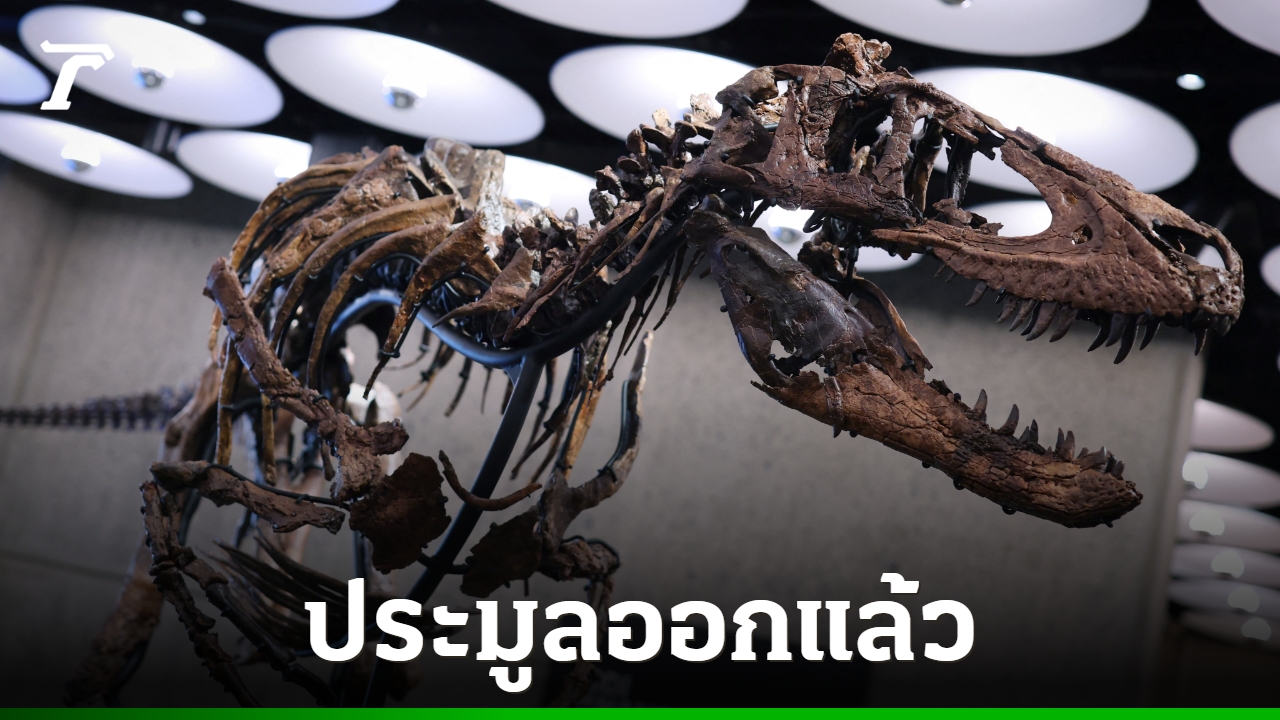
- โครงกระดูกทาร์โบซอรัสที่ถูกลักลอบนำออกจากมองโกเลียเคยถูกประมูลในสหรัฐฯ ก่อนศาลสั่งให้ส่งคืนมองโกเลีย
อยู่ร่วมยุคกับใคร
ไดโนเสาร์ที่พบในหมวดหินเดียวกับทาร์โบซอรัส (Nemegt) แปลว่าอาศัยอยู่ในพื้นที่และช่วงเวลาใกล้เคียงกัน

Gallimimus

Elmisaurus

Oksoko

Anserimimus

Barsboldia

Homalocephale

เทอริซิโนซอรัส
Therizinosaurus

Adasaurus
ข้อมูลหมวดหินจาก Paleobiology Database นับเฉพาะหมวดหินหลักของแต่ละสกุล หมวดหินหนึ่งอาจกินเวลาหลายแสนถึงหลายล้านปี จึงไม่ได้แปลว่าสองตัวนี้เคยเจอกันจริง
ข้อมูลเชิงลึก
- การจัดหมวดหมู่
- เทอโรพอด (นักล่าสองขา)
- วงศ์ (Family)
- Tyrannosauridae
- ช่วงเวลาที่มีชีวิตอยู่
- 66–89.8 ล้านปีก่อน
- ยุคทางธรณีวิทยา
- Coniacian – Maastrichtian
- ผู้ตั้งชื่อทางวิทยาศาสตร์
- Maleev, 1955
- จำนวนซากดึกดำบรรพ์ที่พบ
- 56 แหล่ง
ประเทศที่พบซากดึกดำบรรพ์
- จีน
- มองโกเลีย
- รัสเซีย
ข้อมูลอ้างอิงจาก Paleobiology Database และ Wikidata