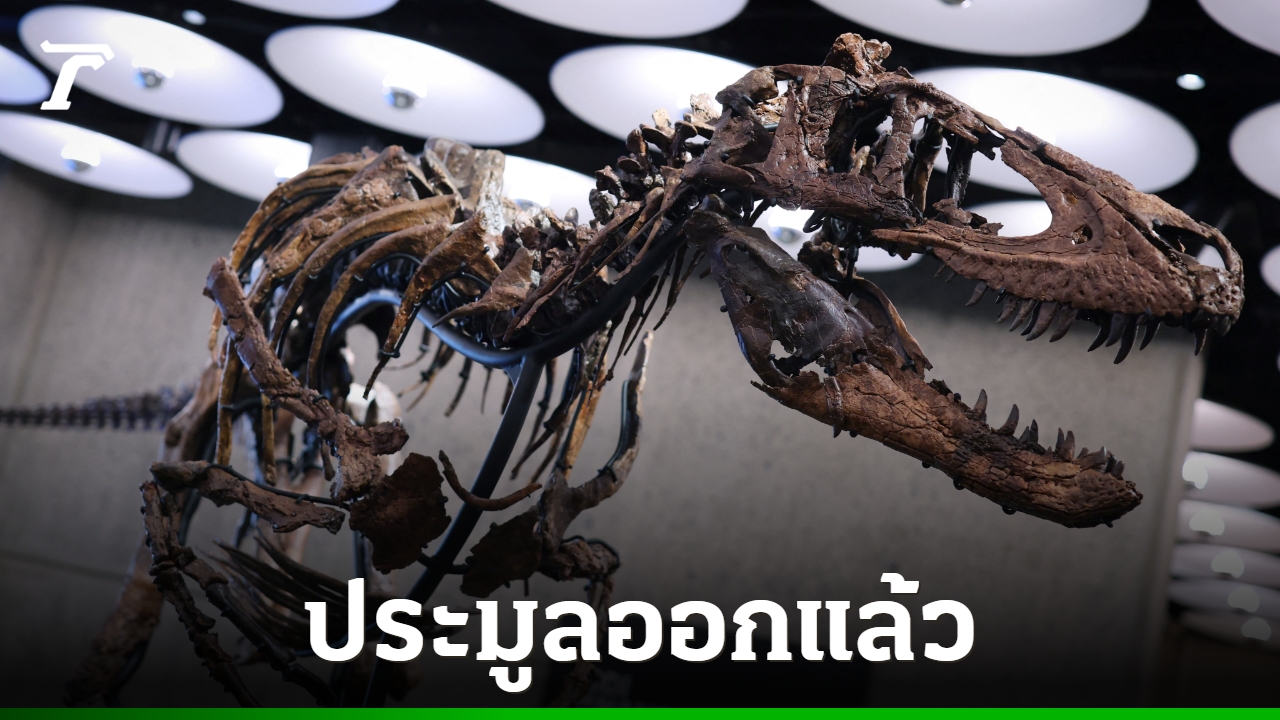
ภาพจาก AI
ข้อควรรู้: ไดโนเสาร์ตัวนี้รู้จักจากซากเพียงบางส่วน ภาพนี้เติมส่วนที่ไม่พบด้วยการคาดเดาจากญาติใกล้ชิด จึงอาจต่างจากตัวจริงได้มาก
ความถูกต้องตาม prompt
89% (8/9 ข้อ)
จุดที่ภาพไม่ตรงกับ prompt
- มือยื่นไปข้างหน้า กรงเล็บชี้ลงพื้นควรเป็น: ฝ่ามือหันเข้าหากัน ไม่คว่ำลงหรือห้อยลง
ดูรายการตรวจ, prompt และแหล่งข้อมูล
- ✓ยืนสองขา หลังขนานพื้น หางยื่นตรงไม่ลากพื้น
- ✓ปากปิด มีริมฝีปากปิดฟันจนมองไม่เห็นฟัน
- ✕ฝ่ามือหันเข้าหากัน ไม่คว่ำลงหรือห้อยลงมือยื่นไปข้างหน้า กรงเล็บชี้ลงพื้น
- ✓เท้ามีนิ้วรับน้ำหนัก 3 นิ้ว
- ✓แขนยาวแข็งแรง มีกรงเล็บโค้งขนาดใหญ่มากที่นิ้วโป้งและนิ้วแรก
- ✓นักล่ารูปร่างเพรียวยาวราว 6 เมตร หัวยาวแคบ ขายาว
- ✓เห็นทั้งตัวในมุมด้านข้าง
- ✓ฉากตรงกับยุคและแหล่งที่พบฟอสซิล
- ✓ไม่มีตัวหนังสือ คน หรือวัตถุสมัยใหม่
ตรวจโดย Claude Opus 5.5 (ตรวจจากภาพทีละข้อ) เมื่อ 28 ต.ค. 2569 · คะแนนคือสัดส่วนข้อที่ภาพทำได้ตรงกับ prompt ไม่ใช่การรับรองความถูกต้องทางวิทยาศาสตร์โดยผู้เชี่ยวชาญ
Prompt ที่ใช้สร้างภาพ
Scientifically accurate paleoart of Phuwiangvenator, a carnivore Megaraptora dinosaur from Barremian times (125.77–121.4 million years ago). Bipedal with the back held roughly horizontal and the tail held straight out behind for balance, never dragging on the ground. NOT standing upright like a kangaroo. Mouth closed with all teeth fully hidden behind scaly lips, like a monitor lizard. NO visible teeth. Long, strong arms with an enormous curved claw on the thumb and a large claw on the first finger. Reference: Phuwiangvenator is an extinct genus of megaraptoran theropod that lived during the Early Cretaceous period in what is now Thailand. It contains only the type species, P. yaemniyomi. The generic name of Phuwiangvenator comes from the Phu Wiang mountains, where the holotype was discovered, and the Latin word "venator" meaning hunter. Anatomy: hands held with palms facing each other (not pronated, not palms-down, not dangling); three main weight-bearing toes on each foot; a slender, lightly built predator about 6 meters long with a long, narrow skull and long legs. Full body in side view, whole animal visible, standing in an Early Cretaceous river floodplain like the Sao Khua Formation of northeastern Thailand, warm and semi-arid with conifers, cycads and ferns along meandering rivers, no grass and no flowering plants. Natural history museum illustration style, realistic textures and natural daylight, muted natural colors. No text, no labels, no humans, no modern objects.
ข้อมูลใน prompt อ้างอิงจาก Wikipedia (en) และ Paleobiology Database
ภูเวียงเวเนเตอร์
Phuwiangvenator
เจอตัวนี้ในเกม
ในเกมเอาตัวรอดยุคครีเทเชียส หมวดหินเสาขัว · เปิดเว็บเกม play.dinocodex.com
เล่นเป็นภูเวียงเวเนเตอร์
ยังไม่มีเนื้อหาภาษาไทยสำหรับไดโนเสาร์ตัวนี้ แต่ข้อมูลทางวิทยาศาสตร์ด้านล่างมีครบถ้วน
อยู่ร่วมยุคกับใคร
ไดโนเสาร์ที่พบในหมวดหินเดียวกับภูเวียงเวเนเตอร์ (Sao Khua) แปลว่าอาศัยอยู่ในพื้นที่และช่วงเวลาใกล้เคียงกัน

ภูเวียงโกซอรัส
Phuwiangosaurus

กินรีมิมัส
Kinnareemimus

สยามโมไทรันนัส
Siamotyrannus

วายุแรปเตอร์
Vayuraptor
ข้อมูลหมวดหินจาก Paleobiology Database นับเฉพาะหมวดหินหลักของแต่ละสกุล หมวดหินหนึ่งอาจกินเวลาหลายแสนถึงหลายล้านปี จึงไม่ได้แปลว่าสองตัวนี้เคยเจอกันจริง
ข้อมูลเชิงลึก
- การจัดหมวดหมู่
- เทอโรพอด (นักล่าสองขา)
- วงศ์ (Family)
- ไม่ทราบ
- ช่วงเวลาที่มีชีวิตอยู่
- 121.4–125.77 ล้านปีก่อน
- ยุคทางธรณีวิทยา
- Barremian
- ผู้ตั้งชื่อทางวิทยาศาสตร์
- Samathi et al., 2019
- จำนวนซากดึกดำบรรพ์ที่พบ
- 2 แหล่ง
ประเทศที่พบซากดึกดำบรรพ์
- ไทย
ข้อมูลอ้างอิงจาก Paleobiology Database และ Wikidata