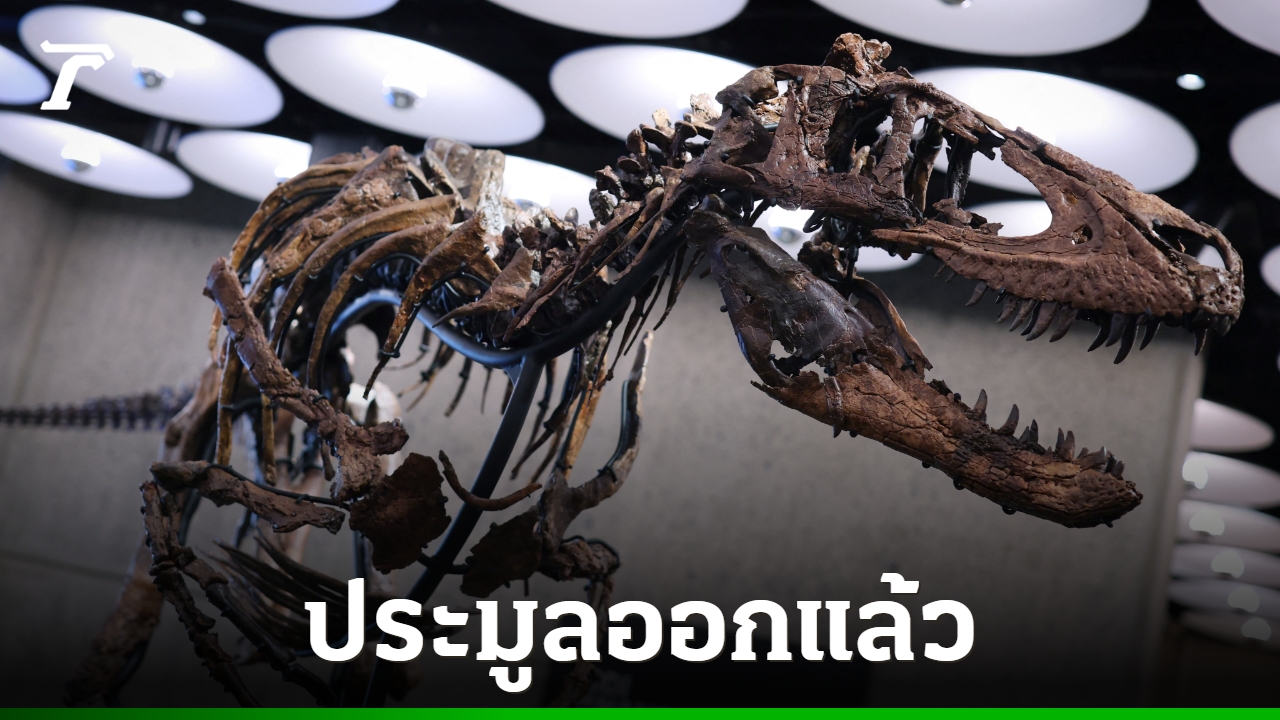
ภาพจาก AI
ความถูกต้องตาม prompt
100% (11/11 ข้อ)
ดูรายการตรวจ, prompt และแหล่งข้อมูล
- ✓ยืนสองขา หลังขนานพื้น หางยื่นตรงไม่ลากพื้น
- ✓ปากปิด มีริมฝีปากปิดฟันจนมองไม่เห็นฟัน
- ✓ฝ่ามือหันเข้าหากัน ไม่คว่ำลงหรือห้อยลงแขนเล็กมากจนเห็นทิศของมือไม่ชัด
- ✓เท้ามีนิ้วรับน้ำหนัก 3 นิ้ว
- ✓หัวสั้นทู่ มีเขาหนา 2 อันยื่นออกด้านข้างเหนือตาแบบวัวกระทิง
- ✓แขนเล็กกุดมาก เล็กกว่าแขน T. rex
- ✓ผิวมีเกล็ดรูปกรวยใหญ่เรียงเป็นแถวตามลำตัว
- ✓ขาหลังยาวเรียวเหมาะกับการวิ่ง
- ✓เห็นทั้งตัวในมุมด้านข้าง
- ✓ฉากตรงกับยุคและแหล่งที่พบฟอสซิล
- ✓ไม่มีตัวหนังสือ คน หรือวัตถุสมัยใหม่
ตรวจโดย Claude Opus 5.5 (ตรวจจากภาพทีละข้อ) เมื่อ 28 ต.ค. 2569 · คะแนนคือสัดส่วนข้อที่ภาพทำได้ตรงกับ prompt ไม่ใช่การรับรองความถูกต้องทางวิทยาศาสตร์โดยผู้เชี่ยวชาญ
Prompt ที่ใช้สร้างภาพ
Scientifically accurate paleoart of Carnotaurus, a carnivore Abelisauridae dinosaur from the Maastrichtian of the Late Cretaceous (about 69–66 million years ago). Bipedal with the back held roughly horizontal and the tail held straight out behind for balance, never dragging on the ground. NOT standing upright like a kangaroo. Mouth closed with all teeth fully hidden behind scaly lips, like a monitor lizard. NO visible teeth. A short, deep, blunt skull with two thick horns sticking out sideways above the eyes, like a bull. Tiny, stubby, almost useless arms much smaller than a tyrannosaur's. Reference: Carnotaurus is a genus of theropod dinosaur that lived in South America during the Late Cretaceous period, between 69 and 66 million years ago. The only species is Carnotaurus sastrei. Known from a single well-preserved skeleton, it is one of the best-understood theropods from the Southern Hemisphere. Anatomy: hands held with palms facing each other (not pronated, not palms-down, not dangling); three main weight-bearing toes on each foot; skin covered in rows of large cone-shaped scales along the sides and back; long, slender hind legs built for running. Full body in side view, whole animal visible, standing in a Late Cretaceous coastal plain in Patagonia, Argentina, like the La Colonia Formation, with conifers, ferns and early flowering plants near a tidal estuary, no grass. Natural history museum illustration style, realistic textures and natural daylight, muted natural colors. No text, no labels, no humans, no modern objects.
ข้อมูลใน prompt อ้างอิงจาก Wikipedia (en) และ Paleobiology Database
คาร์โนทอรัส
Carnotaurus
ความหมายของชื่อ: มาจากภาษาละติน แปลว่า "วัวกินเนื้อ" ตามเขาสั้น ๆ สองข้างเหนือตา
📏 ยาวประมาณ 8 เมตร หนักราว 1.5 ตัน ยาวพอ ๆ กับรถบรรทุกเล็ก
📐 เทียบขนาดกับไดโนเสาร์ตัวอื่น →เจอตัวนี้ในเกม
ในเกมลูกโลกทวีปเลื่อน ทายว่าพบฟอสซิลที่ไหนบนโลกยุคโบราณ · เปิดเว็บเกม globe.dinocodex.com
ปักหมุดคาร์โนทอรัสบนลูกโลก
คาร์โนทอรัสเป็นนักล่าจากอาร์เจนตินาในช่วงปลายยุคครีเทเชียส หัวสั้นลึก มีเขาสองข้างเหนือตา ขาหลังยาวเหมาะกับการวิ่ง และแขนสั้นจิ๋วยิ่งกว่าไทแรนโนซอรัสเมื่อเทียบกับขนาดตัว
เกร็ดความรู้
- ฟอสซิลของคาร์โนทอรัสมีรอยพิมพ์ผิวหนังเป็นบริเวณกว้าง เห็นเกล็ดเล็ก ๆ แทรกด้วยปุ่มนูนเรียงเป็นแถว
- แขนท่อนล่างของมันสั้นมากจนแทบใช้งานไม่ได้
อยู่ร่วมยุคกับใคร
ไดโนเสาร์ที่พบในหมวดหินเดียวกับคาร์โนทอรัส (La Colonia) แปลว่าอาศัยอยู่ในพื้นที่และช่วงเวลาใกล้เคียงกัน


ข้อมูลหมวดหินจาก Paleobiology Database นับเฉพาะหมวดหินหลักของแต่ละสกุล หมวดหินหนึ่งอาจกินเวลาหลายแสนถึงหลายล้านปี จึงไม่ได้แปลว่าสองตัวนี้เคยเจอกันจริง
ข้อมูลเชิงลึก
- การจัดหมวดหมู่
- เทอโรพอด (นักล่าสองขา)
- วงศ์ (Family)
- Abelisauridae
- ช่วงเวลาที่มีชีวิตอยู่
- 66–72.2 ล้านปีก่อน
- ยุคทางธรณีวิทยา
- Maastrichtian
- ผู้ตั้งชื่อทางวิทยาศาสตร์
- Bonaparte, 1985
- จำนวนซากดึกดำบรรพ์ที่พบ
- 1 แหล่ง
ประเทศที่พบซากดึกดำบรรพ์
- อาร์เจนตินา
ข้อมูลอ้างอิงจาก Paleobiology Database และ Wikidata