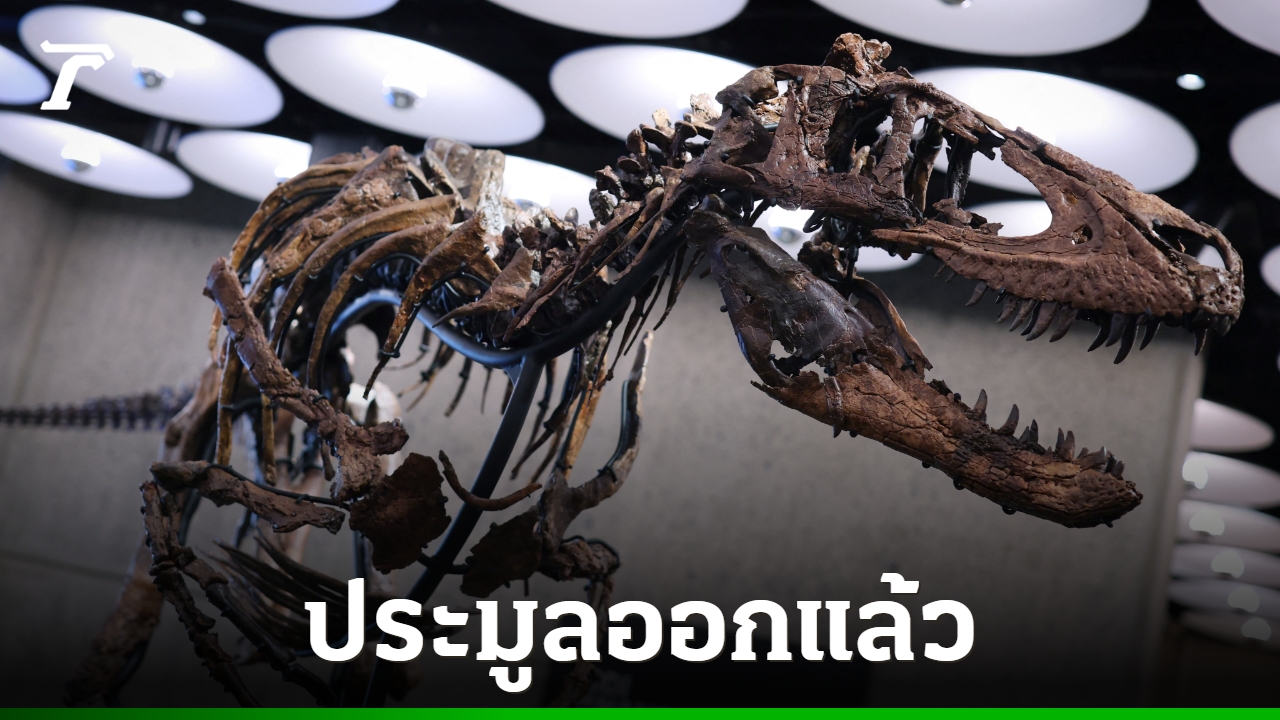
ภาพจาก AI
ความถูกต้องตาม prompt
89% (8/9 ข้อ)
จุดที่ภาพไม่ตรงกับ prompt
- มือห้อยลง กรงเล็บชี้ลงพื้นควรเป็น: ฝ่ามือหันเข้าหากัน ไม่คว่ำลงหรือห้อยลง
ดูรายการตรวจ, prompt และแหล่งข้อมูล
- ✓ยืนสองขา หลังขนานพื้น หางยื่นตรงไม่ลากพื้น
- ✓ปากปิด มีริมฝีปากปิดฟันจนมองไม่เห็นฟัน
- ✕ฝ่ามือหันเข้าหากัน ไม่คว่ำลงหรือห้อยลงมือห้อยลง กรงเล็บชี้ลงพื้น
- ✓เท้ามีนิ้วรับน้ำหนัก 3 นิ้ว
- ✓กะโหลกยาว ต่ำ แคบ ไม่กว้างลึกแบบ T. rex
- ✓ตัวใหญ่ยาว 12–13 เมตร แขนสั้นมี 3 นิ้ว ผิวเกล็ดเล็ก
- ✓เห็นทั้งตัวในมุมด้านข้าง
- ✓ฉากตรงกับยุคและแหล่งที่พบฟอสซิล
- ✓ไม่มีตัวหนังสือ คน หรือวัตถุสมัยใหม่
ตรวจโดย Claude Opus 5.5 (ตรวจจากภาพทีละข้อ) เมื่อ 31 ต.ค. 2569 · คะแนนคือสัดส่วนข้อที่ภาพทำได้ตรงกับ prompt ไม่ใช่การรับรองความถูกต้องทางวิทยาศาสตร์โดยผู้เชี่ยวชาญ
Prompt ที่ใช้สร้างภาพ
Scientifically accurate paleoart of Carcharodontosaurus, a carnivore Carcharodontosauridae dinosaur from the Cenomanian age of the Late Cretaceous (about 100–94 million years ago). Bipedal with the back held roughly horizontal and the tail held straight out behind for balance, never dragging on the ground. NOT standing upright like a kangaroo. Mouth closed with all teeth fully hidden behind scaly lips, like a monitor lizard. NO visible teeth. A long, low, narrow skull with blade-like teeth, NOT the broad deep skull of Tyrannosaurus. Reference: Carcharodontosaurus is a genus of large theropod dinosaur that lived in Northwest Africa from about 100 to 94 million years ago during the Cenomanian age of the late Cretaceous period. The genus was first described in 1925 by French paleontologists Charles Depéret and Justin Savornin as Megalosaurus saharicus, based on two fossil teeth discovered in Algeria, which are now lost. A partial skeleton was discovered in Egypt as early as 1914 by crews of German paleontologist Ernst Stromer, although he did not report the find until 1931. Based on this specimen as well as the teeth previously described by Depéret and Savornin, Stromer established the genus Carcharodontosaurus, with C. saharicus as the only species. Anatomy: hands held with palms facing each other (not pronated, not palms-down, not dangling); three main weight-bearing toes on each foot; a huge animal about 12–13 meters long, short arms with three clawed fingers, powerful hind legs, skin of small scales. Full body in side view, whole animal visible, standing in a wide Late Cretaceous river system in North Africa, like the Kem Kem beds of Morocco, on a sandy riverbank with ferns and conifers, no grass. Natural history museum illustration style, realistic textures and natural daylight, muted natural colors. No text, no labels, no humans, no modern objects.
ข้อมูลใน prompt อ้างอิงจาก Wikipedia (en) และ Paleobiology Database
คาร์คาโรดอนโทซอรัส
Carcharodontosaurus
ความหมายของชื่อ: แปลว่า "กิ้งก่าฟันฉลาม" เพราะฟันแบนคมมีรอยหยักคล้ายฟันฉลามขาว
📏 ยาวประมาณ 12.5 เมตร ใกล้เคียงไทแรนโนซอรัส
📐 เทียบขนาดกับไดโนเสาร์ตัวอื่น →เจอตัวนี้ในเกม
ในเกมลูกโลกทวีปเลื่อน ทายว่าพบฟอสซิลที่ไหนบนโลกยุคโบราณ · เปิดเว็บเกม globe.dinocodex.com
ปักหมุดคาร์คาโรดอนโทซอรัสบนลูกโลก
คาร์คาโรดอนโทซอรัสเป็นนักล่ายักษ์จากแอฟริกาเหนือในช่วงกลางยุคครีเทเชียส อาศัยในพื้นที่เดียวกับสไปโนซอรัส มีหัวยาวและฟันใบมีดสำหรับเฉือนเนื้อ
เกร็ดความรู้
- เช่นเดียวกับสไปโนซอรัส ฟอสซิลชุดแรกของมันถูกทำลายในเหตุระเบิดที่มิวนิกเมื่อปี ค.ศ. 1944 ฟอสซิลที่ศึกษากันทุกวันนี้พบใหม่ในโมร็อกโกและไนเจอร์
- แอฟริกาเหนือยุคนั้นมีนักล่ายักษ์อยู่ร่วมกันหลายชนิด ทั้งคาร์คาโรดอนโทซอรัส สไปโนซอรัส และอื่น ๆ นักวิทยาศาสตร์ยังสงสัยว่าระบบนิเวศเลี้ยงนักล่าใหญ่ได้มากขนาดนี้ได้อย่างไร
อยู่ร่วมยุคกับใคร
ไดโนเสาร์ที่พบในหมวดหินเดียวกับคาร์คาโรดอนโทซอรัส (Ifezouane, Elrhaz, Baharîje, Echkar) แปลว่าอาศัยอยู่ในพื้นที่และช่วงเวลาใกล้เคียงกัน

สไปโนซอรัส
Spinosaurus

Ouranosaurus

Erectopus

Aegyptosaurus

Deltadromeus

Bahariasaurus

Nigersaurus

Spinostropheus
ข้อมูลหมวดหินจาก Paleobiology Database นับเฉพาะหมวดหินหลักของแต่ละสกุล หมวดหินหนึ่งอาจกินเวลาหลายแสนถึงหลายล้านปี จึงไม่ได้แปลว่าสองตัวนี้เคยเจอกันจริง
ข้อมูลเชิงลึก
- การจัดหมวดหมู่
- เทอโรพอด (นักล่าสองขา)
- วงศ์ (Family)
- Carcharodontosauridae
- ช่วงเวลาที่มีชีวิตอยู่
- 72.2–143.1 ล้านปีก่อน
- ยุคทางธรณีวิทยา
- Berriasian – Campanian
- ผู้ตั้งชื่อทางวิทยาศาสตร์
- Stromer, 1931
- จำนวนซากดึกดำบรรพ์ที่พบ
- 44 แหล่ง
ประเทศที่พบซากดึกดำบรรพ์
- บราซิล
- แอลจีเรีย
- อียิปต์
- โมร็อกโก
- ไนเจอร์
- ตูนิเซีย
ข้อมูลอ้างอิงจาก Paleobiology Database และ Wikidata